The six factions
Mechanically identical. Not remotely the same.
Every faction fields the same units and raises the same buildings. What differs is what they think the Waste is for, and how they explain themselves when they take your water.
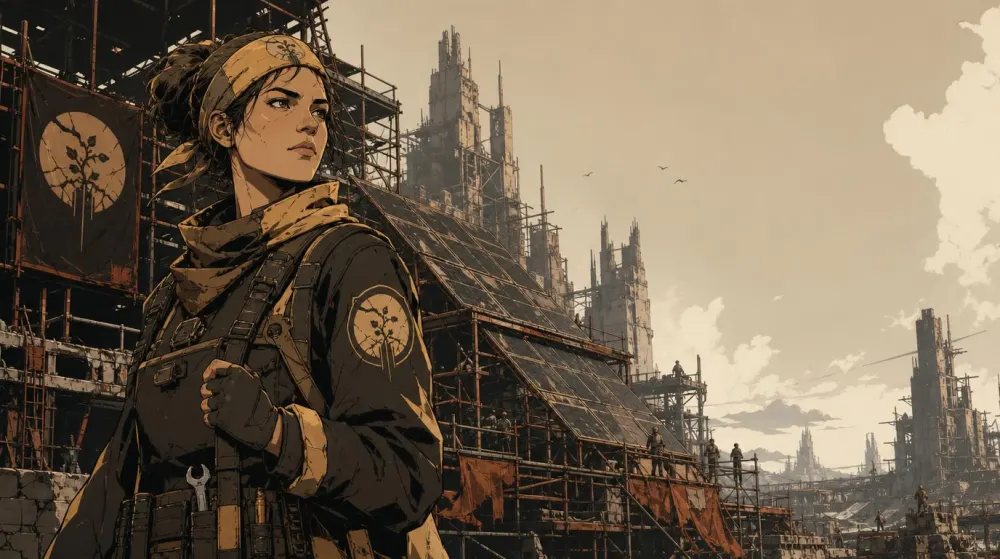
Reclamation
Vine through cracked concrete
“We built it once. We remember how.”
Reclamation holds are run by people who trace their authority back to old-world engineers, planners and administrators — or who simply act like they do. Their compounds are built around whatever pre-Collapse infrastructure survived: a dam, a rail yard, a data centre repurposed as an archive.
They believe the way forward is disciplined rebuilding — grids, treaties, standards — not just survival.
Look — salvaged concrete and steel, hand-painted safety signage, patched machinery kept scrupulously maintained.
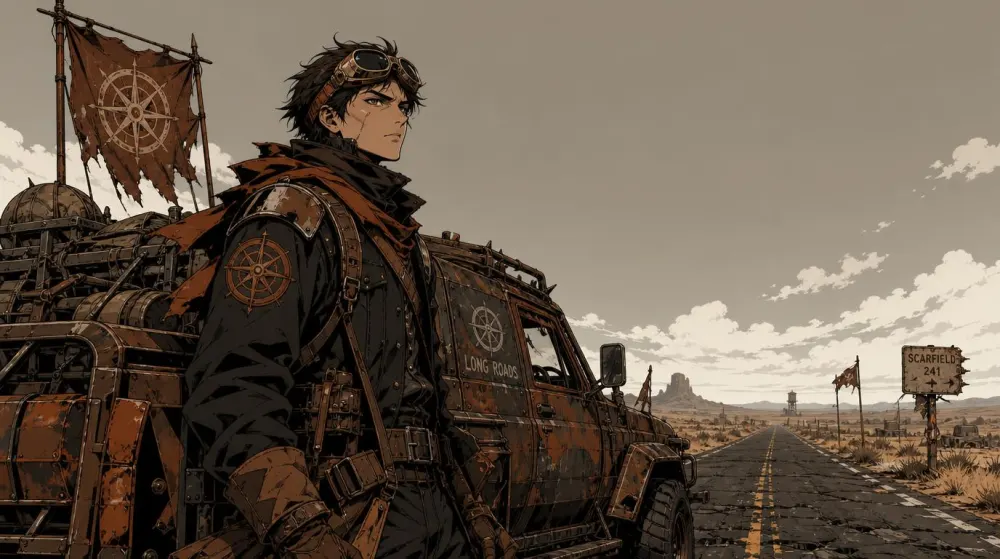
Long Roads
Wagon wheel and compass rose
“A hold that can't be reached is already dead.”
Caravaners first and settlers second — a faction organised less around any single hold than around the routes between them. They run the relay stations, keep the water caches stocked, and know which stretches of Waste are crossable this season and which have turned deadly.
Other factions depend on them more than they'd like to admit, and the Long Roads know it.
Look — wheeled and multi-terrain vehicles, route markers and cairns, a culture built around mobility.
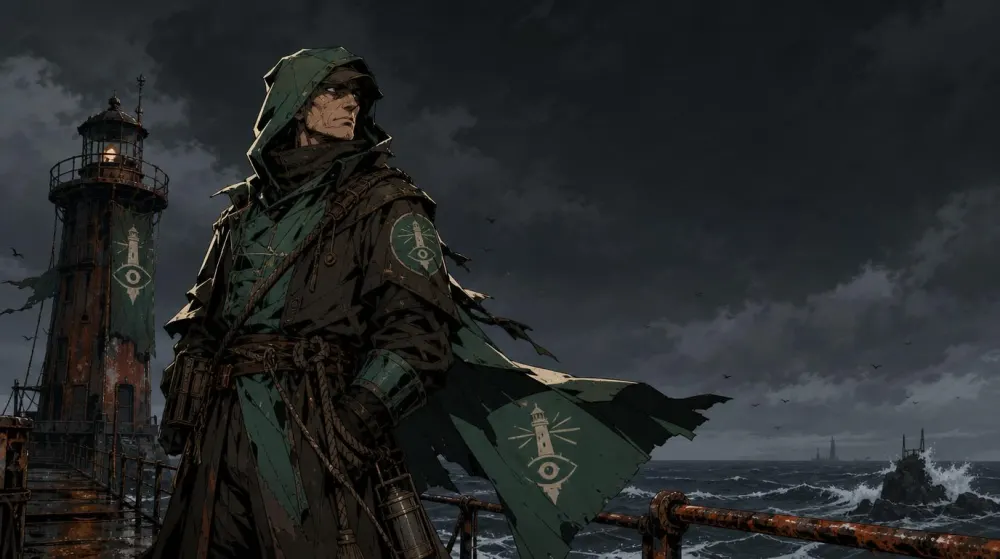
Tidewatch
Lighthouse beam and watchful eye
“The old coast is still down there.”
Tidewatch holds sit on drowned coastlines, built on what used to be higher ground above cities that are now mostly underwater. They live by salvage — diving old buildings, stripping the last usable materials from the drowned world — and by what the sea still gives up on its own.
Other factions read their fatalism as grim. Tidewatch would say they're the only ones who've made real peace with what happened.
Look — wetsuit-scrap diving rigs, salvage boats, buildings raised on stilts or grown into drowned towers.
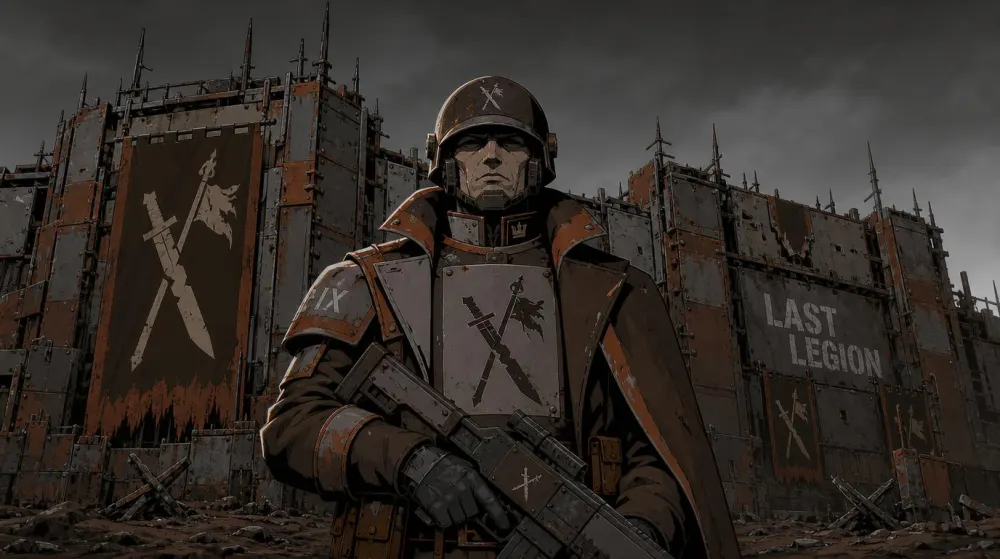
Last Legion
Broken sword and standard pole
“Someone has to hold the line. It might as well be us.”
Descendants — literal or institutional — of the militaries and emergency services that didn't disband when their governments did. They kept their chain of command, their drills, and their sense that order is worth enforcing even with no capital left to enforce it for.
Legion holds are the most conventionally defensible on the map, and the most likely to intervene in a fight that isn't technically theirs.
Look — surviving hardware kept in service past its lifespan, insignia, discipline as visible culture.
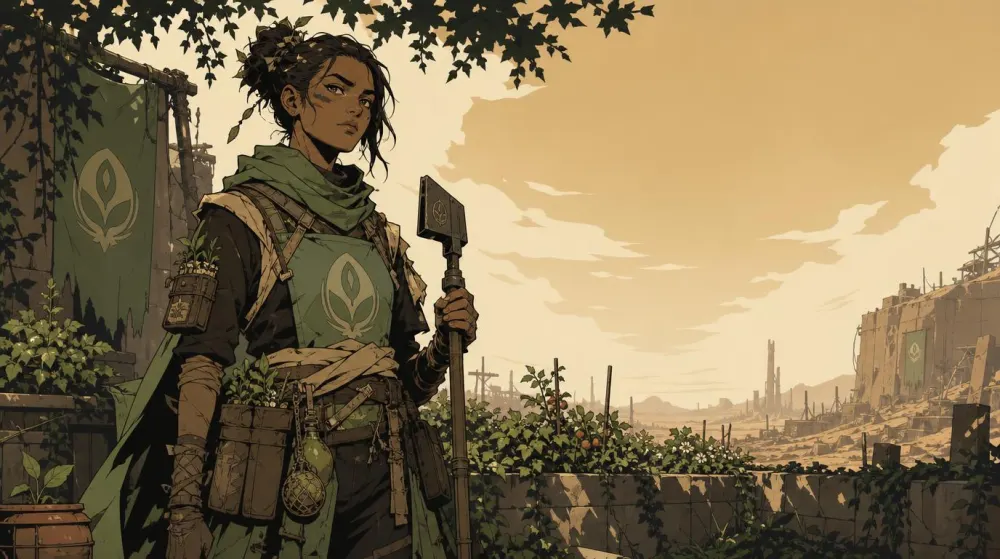
Verdant
Seed pod splitting into leaves
“The land isn't dead. It's waiting.”
Verdant holds are organised around the belief that the Collapse was a symptom, not a cause, and that the real work is repairing the relationship between people and land rather than surviving on top of it.
They run the most ambitious growhouses and reclamation farms on the map, and they mean it as a statement as much as a strategy.
Look — hydroponic rigs built from salvage, hand-cultivated soil beds, growth against the odds.
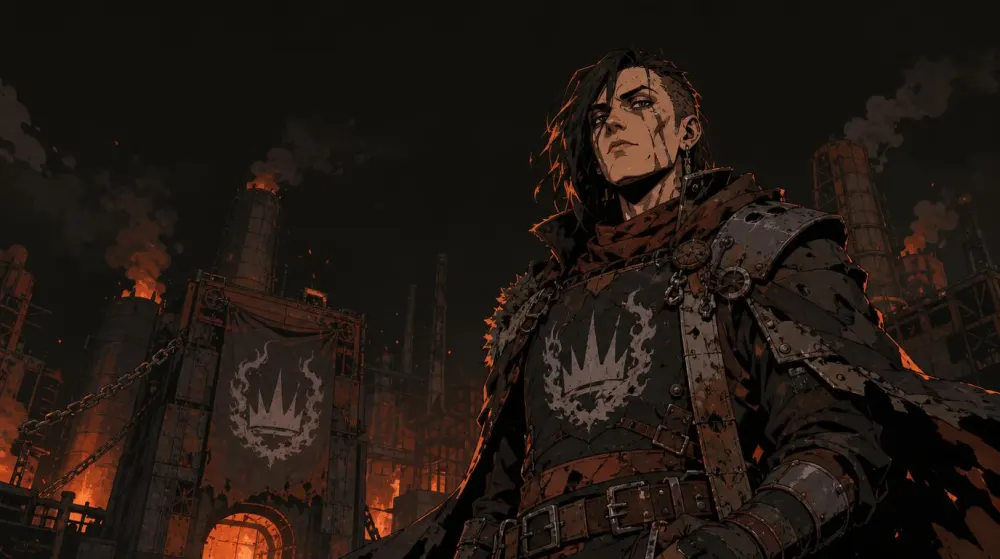
Ashkings
Jagged crown wreathed in embers
“Nobody's coming to save you.”
The Ashkings emerged from the holds that didn't have the luxury of ideology in the worst years — only survival, and later, strength as its own justification. They take what they need and defend what they've taken, and they've stopped pretending otherwise.
They aren't villains so much as people who made hard calls early and never found a reason to stop.
Look — scavenged armour plating, improvised heavy vehicles, totems built from what was taken.
You are assigned one. You decide what it means.
Factions are assigned as players join a game, and none of them starts with an advantage. What you do with the name is the part nobody scripts.