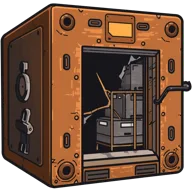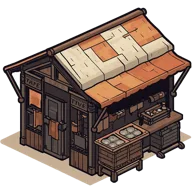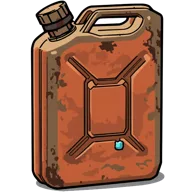
Water
Keeps your holds alive and your units in the field. Wells, catchers, aquifer access and desalination rigs decide a hold's yield — which is really a statement about where it sits.
Spent on: upkeep, marches, recruitment
How to play
There is no real-time play in Last Waters. You look at the map, decide what your faction does next, and submit. The rest happens while you're doing something else.
Everything you queue before the deadline is read at the same instant as everyone else's. Each game sets its own deadline when it is created, so the hour is yours to pick and the same every day after that.
Read
The tick report tells you what moved, what fell, and what it cost. Fog of war means you only see what you had eyes on.
Plan
Check yields against costs. Decide whether this is a building day, a recruiting day, or the day you take Reservoir Twelve.
Submit
Queue your orders. Edit them as often as you like until the lock. Nobody can see what you filed.
Resolve
Every order in the game executes together. Two armies ordered onto the same route meet there. Ties are ugly for both.
Keeps your holds alive and your units in the field. Wells, catchers, aquifer access and desalination rigs decide a hold's yield — which is really a statement about where it sits.
Spent on: upkeep, marches, recruitment
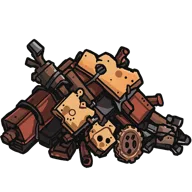
Salvaged material with the old world's engineering already built into it. Scrap is what lets a hold build rather than merely maintain.
Spent on: buildings, Wreckers, repairs
Food, broadly — grown, foraged or fished. It feeds garrisons and lets a hold grow past what its walls currently support.
Spent on: garrisons, growth, Militia
All three are held in one faction-wide pool rather than per hold. In fiction that's the Long Roads' relay network; in play it means a rich hold on the far side of the map can pay for a wall on this one.
No hero units, no tech-gated super weapons. Three roles, and the judgement of when to commit them.
Ordinary hold residents, armed and organised to defend or take territory. Not professional soldiers — neighbours, farmers and salvagers who picked up a weapon because someone had to.
Cheap, everywhere, holds ground
Fast fighters built for speed across the Waste — scouts, raiders and rapid responders, mounted or vehicle-borne. Most associated with Long Roads culture, though every faction fields them.
Reach, vision, pressure
Heavy units built around Waste-salvaged machinery repurposed for assault — construction equipment turned siege equipment. Slow, hard-hitting, built to break fortifications rather than skirmish.
Slow, expensive, takes walls
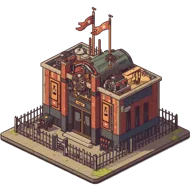
The fortified heart of a hold. Losing it is losing your seat of power, not just a building.
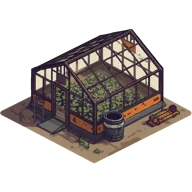
Where a hold coaxes grain out of land that mostly stopped cooperating.
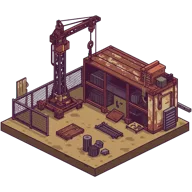
Where Waste salvage is sorted, stripped and turned into usable scrap.
Turns population into an organised fighting force at scale.
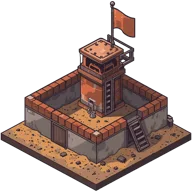
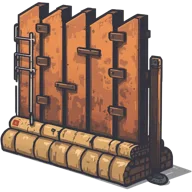
Walls, literally. Earthworks and salvaged fencing that make a hold harder to take.
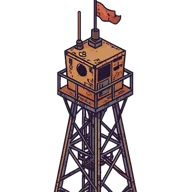
Early warning against raids, and eyes on the routes leading in.
The physical infrastructure of not forgetting what was known before.
The commercial and diplomatic face of a settlement.
Combat maths, movement speeds, the four fog tiers, research, alliances and how a game is won. No account needed to read it.