Skip to content

World & lore

The climate didn't break in a day

It broke over three generations, in droughts that didn't end, coastlines that crept inland a little further every year, and harvests that got thinner until they stopped coming back. Nobody agreed on the year it became undeniable, because there wasn't one.

The premise

Not a story about the end

Governments didn't fall in a single collapse. They thinned out, service by service, region by region, until the word “government” stopped describing anything real outside a few defended cities. What's left of humanity lives in scattered, fortified settlements — holds — separated by land that can no longer support a crop, a well, or a walk longer than a day.

Last Waters is one hold-building conflict among many, at a point where the Waste has stopped spreading and people have started, cautiously, to build again. It's a story about what people do afterward.

Three words govern the setting

Grounded
No magic, no aliens, no exotic future-tech. Everything is explicable by drought, flood, salvage and human ingenuity. A Wrecker crew is a repurposed excavator, not a mech.
Elegiac
There's real loss here and the writing doesn't flinch from it. A ruined coastal hold can be named for what it used to be.
Occasionally hopeful
Holds are rebuilding. Grain grows again in places it hadn't for a decade. People argue about the future because they believe there's going to be one.
The Long Fade

Three eras, one slow unravelling

Nobody in the world uses these names. They're how the history holds together behind the map.

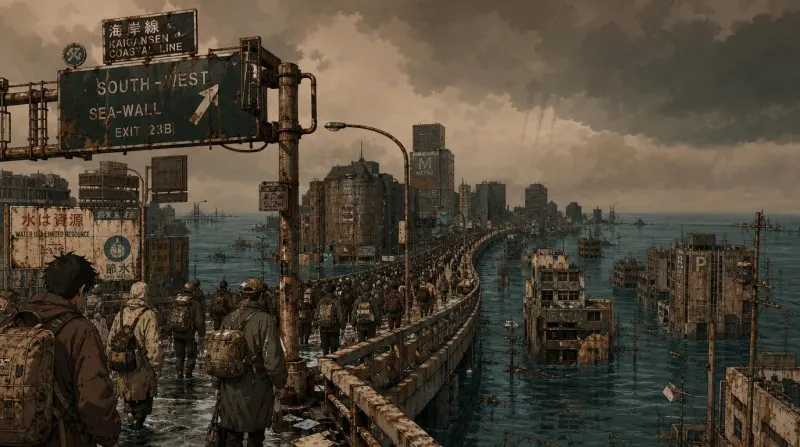
  1. A column of people walking a raised seawall road out of a city half sunk under grey water.

    The Warm Years

    The slow part. Rising seas, failed monsoons, migration crises, resource conflicts over water rather than oil. Institutions strained but mostly held. Most people alive today are three or four generations removed from anyone who remembers this as normal.

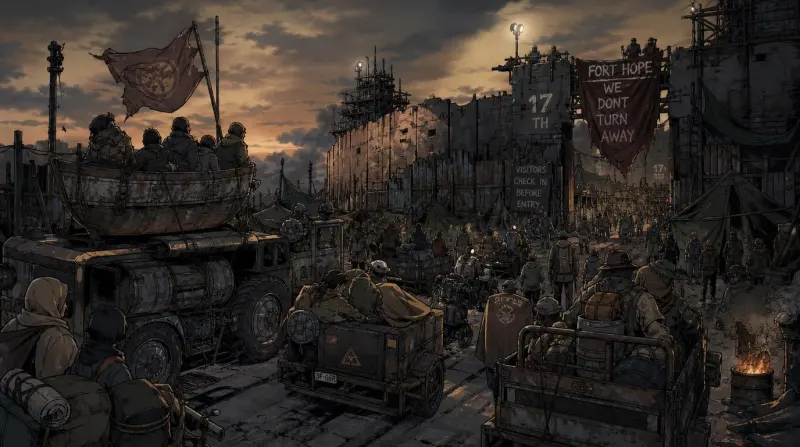
  2. A crowd and laden trucks massed at night outside a fortified gate hung with a banner reading “Fort Hope — we don't turn away”.

    The Thinning

    Services stopped being universal. Grids fragmented into local ones, then failed outright in many places. Millions moved toward whatever land still produced food. This is the era that produced the first fortified holds — emergency shelters that became permanent once it was clear “temporary” wasn't coming back.

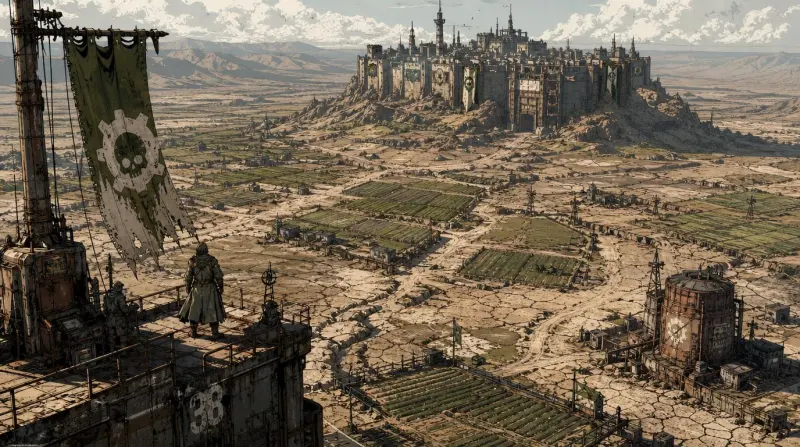
  3. A figure on a rooftop looking out over cultivated plots laid between cracked ground, a walled hold on the rise beyond.

    The Waste Settling

    The land stopped getting worse — not everywhere, but in enough places that a survivable map became fixed rather than shrinking. This is when Last Waters is set, and when the six factions coalesced out of what had been desperate settlements doing whatever worked.

Geography

Islands, and what's between them

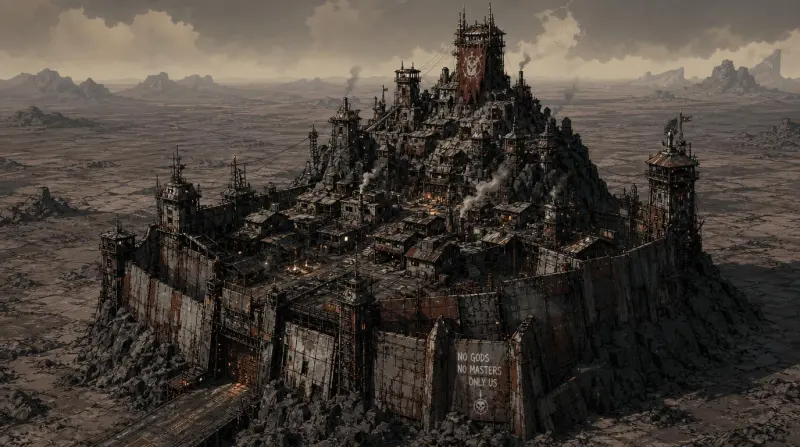
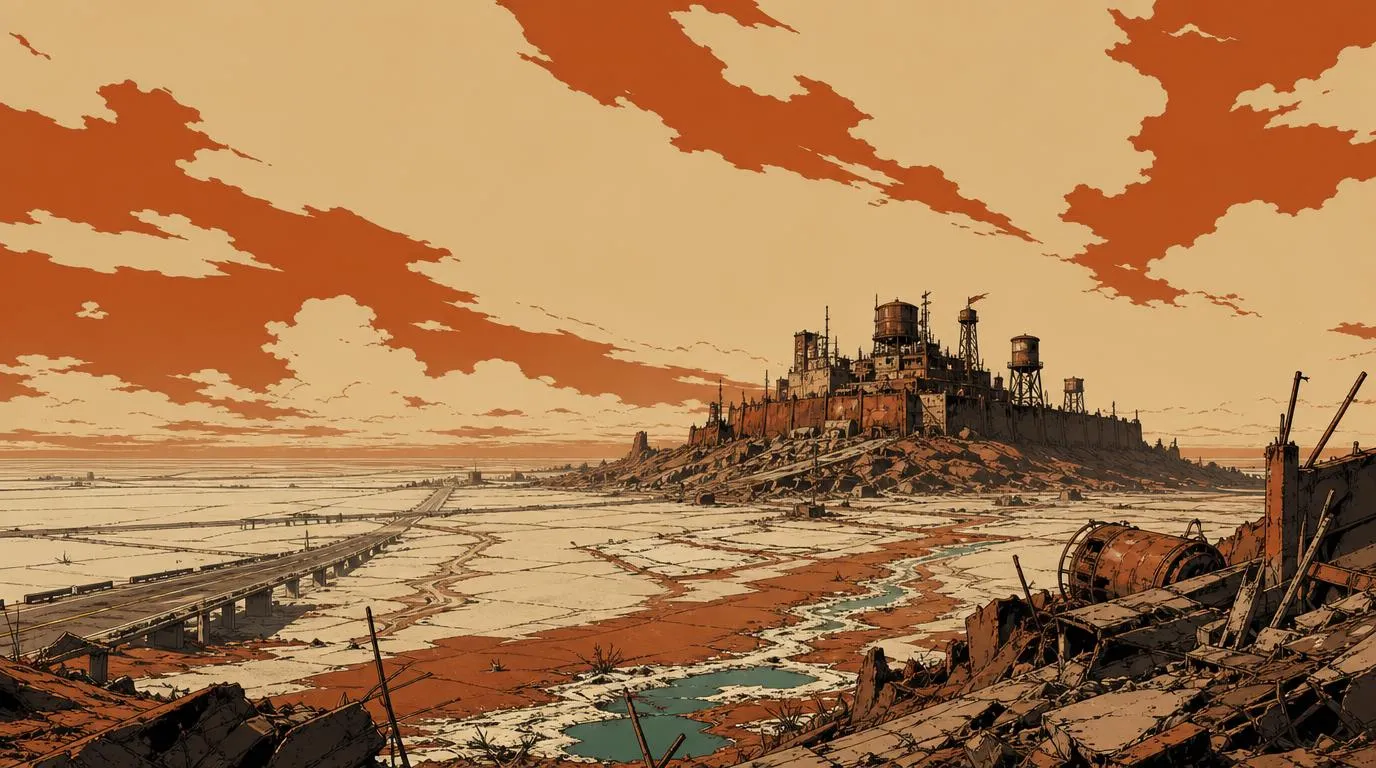
A settlement stacked up a rock outcrop behind sheer salvaged walls, alone on an empty plain.

Holds

Any settlement producing enough water, food and material to sustain itself and defend its walls. They range from a single fortified compound to something approaching a small city, but all share the same existential fact: they are islands. What's between them will kill you if you stay too long.

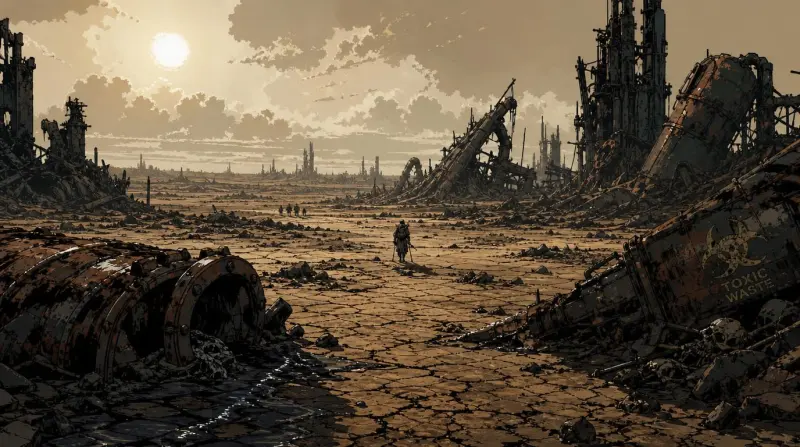
A lone walker crossing cracked ground between the wrecks of vast machines, under a white sun.

The Long Waste

Land too arid, too flooded, too depleted or too poisoned by old industrial runoff to support settlement. Not empty of people — scavengers, raiders and the desperate cross it constantly — but empty of infrastructure. No reliable water, no law, no help if something goes wrong.

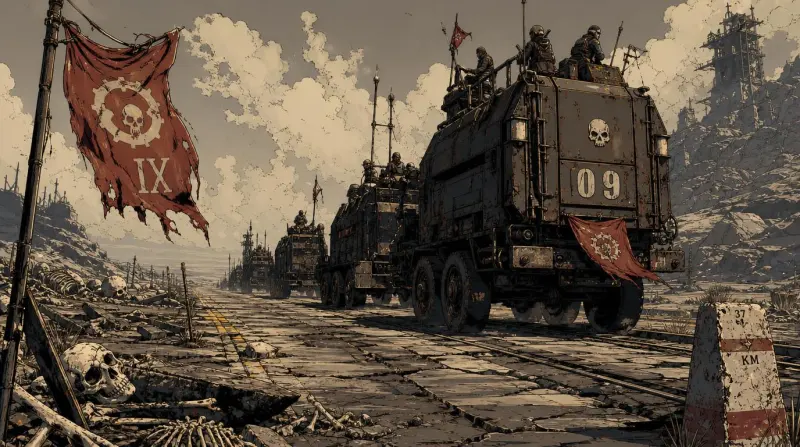
An armoured convoy running an old paved road, banners up, distance markers at the verge.

Routes

Old highways, cleared rail corridors, river channels still navigable, memorised desert tracks. A route being short doesn't mean it's easy — it means it's established. Someone has already done the work of making that crossing survivable, repeatedly, which is exactly why armies and caravans use it.

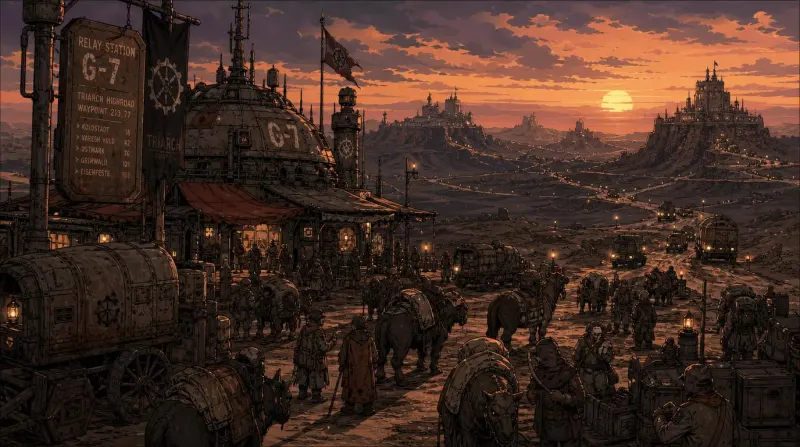
A lamplit relay station at dusk, pack animals and wagons gathered under its waypoint board, lit holds strung along the ridge beyond.

The Network

Your resources sit in one pool because of the Long Roads: professional caravaners who spent a generation building the trust, routes and relay stations to move goods between a faction's holds continuously. The pool isn't one warehouse — it's what the network can make available, faction-wide, on short notice.

Every match, one telling

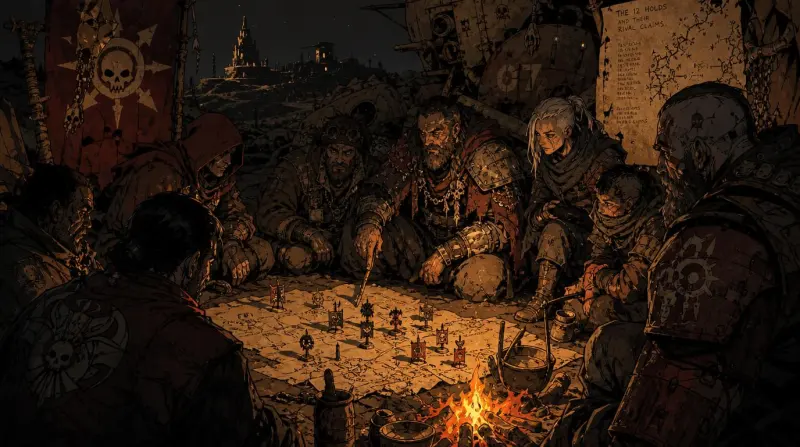
Figures around a fire at night, leaning over a map of holds laid out with playing pieces.

A story, not the story

There is no persistent world and no lore that accretes between games. The Collapse, the Waste and the six factions are the shared backdrop; the hold names, the conflict and the ending are different every time. Each match is one telling of a story that's been told many times across this world, in many holds, with different endings.